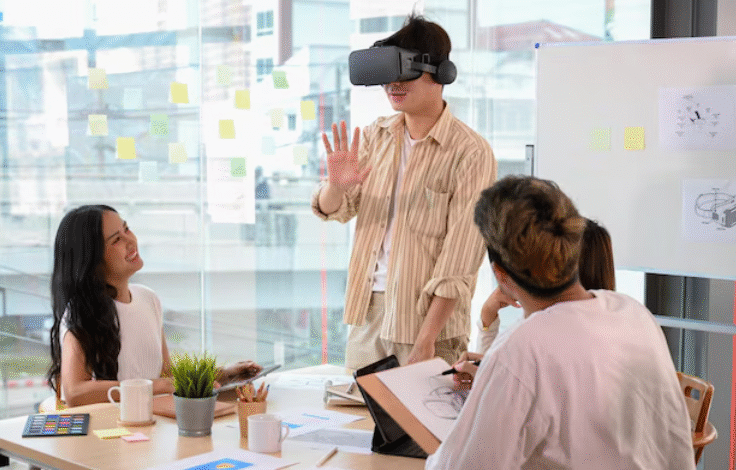
The technologies of Augmented Reality (AR), Virtual Reality (VR), and Mixed Reality (MR) each offer unique enhancements to user experiences. AR enriches the real world with digital overlays, while VR immerses users in entirely new environments. MR, on the other hand, creates an interactive blend of both physical and digital elements. Understanding these distinctions is crucial for grasping their diverse applications and potential future developments across various sectors. What might the future hold for these evolving technologies?
Understanding Augmented Reality (AR)
Augmented Reality (AR) serves as a bridge between the digital and physical worlds, enhancing real-time experiences by overlaying computer-generated content onto the user’s environment.
AR applications utilize sophisticated AR technology to create immersive interactions, fostering creativity and engagement.
As users navigate their surroundings, AR transforms everyday experiences, offering unprecedented opportunities for learning, entertainment, and communication, ultimately expanding the boundaries of personal freedom and expression.
Exploring Virtual Reality (VR)
While many people associate immersive technology with Augmented Reality (AR), Virtual Reality (VR) offers a distinct experience by fully immersing users in a simulated environment.
This technology has transformed entertainment, particularly through gaming advancements, enabling players to engage in immersive experiences that transport them to fantastical realms.
As developers continue to innovate, VR’s potential for freedom and exploration expands exponentially.
Delving Into Mixed Reality (MR)
Mixed Reality (MR) represents a fascinating convergence of the physical and digital worlds, allowing users to interact with both simultaneously.
This technology creates mixed experiences that blend real and virtual elements, fostering immersive environments where users can manipulate digital objects as if they were tangible.
Applications and Future Trends in AR, VR, and MR
The integration of Mixed Reality (MR) into various sectors has paved the way for innovative applications that leverage the strengths of Augmented Reality (AR) and Virtual Reality (VR).
Gaming innovations enhance user engagement, while educational tools revolutionize learning.
Industrial applications improve efficiency, healthcare solutions provide immersive training, and entertainment experiences captivate audiences.
Ultimately, this integration is reshaping marketing strategies to create more interactive consumer interactions.
Conclusion
In the grand tapestry of technology, Augmented Reality, Virtual Reality, and Mixed Reality weave distinct threads, each contributing to a vibrant narrative of human experience. Like three artists painting on the same canvas, AR enhances the existing landscape, VR offers a breathtaking new world, and MR artfully fuses both realms. As these technologies evolve, they hold the potential to transform industries, shape interactions, and ignite creativity, inviting humanity to embark on an extraordinary journey through blended realities.